

Creatine Beyond Sports Nutrition: Cognitive and Healthy Aging Benefits Backed by Research

Updated: Jul 28
Creatine has long been associated with building muscle and enhancing sports performance. But there’s a reason why scientists are now talking about it in connection with brain function and the natural changes in musclular structure and capacity as we get older.
The fact that it is used in sports has not changed, but the focus on creatine has expanded. Creatine can be a valuable tool for maintaining and improving health and quality of life. It’s a fuel for your cells, and therefore has implications for every body system – from muscle to nerves to organs.
This article is for informational purposes only and should not be construed as medical advice. If you have kidney issues, are on any medications, are pregnant/nursing – please consult your physician before considering creatine or any other supplement.
The information provided is accurate, but individual experiences may vary.
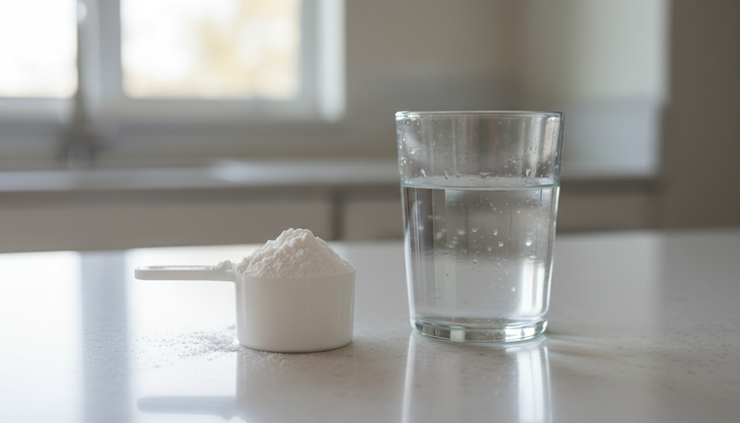
Why creatine is being studied outside the gym
Creatine is an endogenous compound that is integral to the phosphagen system, the body’s rapid recycling pathway for regenerating ATP, the cellular energy currency. This energy molecule is essential for muscular contractions, cellular signaling, and general metabolic processes.
Most of the creatine in the human body is stored in skeletal muscles, with smaller amounts found in the brain, heart, and other tissues. The body synthesizes it from amino acids, and dietary sources include red meat, poultry, fish, and eggs. Vegetarians, therefore, have lower creatine levels compared to non-vegetarians, which may explain why several cognitive studies use vegetarian populations as subjects.
The most established form of creatine is creatine monohydrate, which has been extensively studied and proven safe and effective when used as a sports supplement. Consequently, the compound’s anatomical and physiological effects have been sufficiently explored, facilitating its application in other areas, including the study of healthy brain aging.
What the research says about creatine and cognition
The brain consumes a significant portion of the body’s overall energy, and, under normal physiological conditions, it regulates its energy homeostasis very strictly. Several studies on the effect of creatine on the brain have demonstrated that the compound may enhance cognitive performance, particularly under sleep-deprived conditions, high workload, and aging-related challenges (Avgerinos et al., 2018). Notably, the effect of creatine on cognition has not been consistent across different trials and populations.
However, a common finding among these studies is that creatine seems to improve memory and cognitive performance in individuals with lower dietary creatine intake. Some studies indicate that creatine enhances brain performance during tasks that require high mental exertion or when an individual has reduced sleep. Overall, the effect of creatine on cognition varied with the dosage, duration of administration, age, dietary status, and cognitive assessment tools used.
The evidence above explains why Creatine Beyond Sports Nutrition Cognitive and Healthy Aging Benefits Backed by Research was coined. Creatine beyond sports nutrition: cognitive and healthy aging benefits backed by research. This implies that the supplement may not be suitable for everyone and should not be relied on as the primary intervention for boosting brain performance. However, the existing studies provide sufficient empirical evidence that justifies the need for further extensive research on the relationship between the compound and cognitive performance.

How creatine may fit into healthy aging
Healthy aging research often focuses on mobility, strength, independence, and cognition. Creatine is pertinent in the context of healthy aging since muscle mass and strength decline with age (usually due to decreased protein intake/resistance training/daily physical activity).
Creatine as a supplement does not replace resistance exercise; however, the current literature suggests that creatine combined with resistance training may have added benefits for lean mass, strength, and function beyond resistance training alone in older adults (Candow et al., 2022; Gualano et al., 2012).
The same applies to bone (and general physical function), although the literature is less consistent – creatine probably has little direct effect on bone, but increased muscle mass and strength indirectly improve bone health. However, the practical application of creatine for healthy aging is limited to its effects on muscle performance during resistance training and the associated improvements in physical function.
Physical function in older people is often measured in terms of mobility (i.e., climbing stairs, walking on different surfaces), upper body strength (i.e., carrying objects), lower body strength (i.e., rising from a chair), and the ability to perform resistance training (which generally helps maintain muscle mass and strength). Therefore, the most common and practical application of creatine in healthy aging would be to recommend it as an aid during resistance training.
Practical considerations regarding creatine for healthy aging:
Creatine monohydrate has been proven safe in healthy adults when used in recommended doses. The typical creatine regimen includes a loading phase and a maintenance phase or a daily (no loading) maintenance phase. The choice between them is personal, but I prefer the latter because it is easier to adhere to.
A few practical notes regarding creatine supplementation:
• Creatine pulls water into muscle cells, so it is essential to stay hydrated;
• Consistency is key, and sporadic dosing will produce few meaningful results;
• Stick to creatine monohydrate, as other forms have not demonstrated any significant benefits;
• Do not take creatine if you have serious health conditions (consult your doctor instead).
Most people who take creatine experience no adverse effects. However, some people may experience GI discomfort (especially if they take a large dose at once) and/or water retention (especially if they take creatine for an extended period of time).

The limitations of the evidence still stand
The enthusiasm for creatine monohydrate may need moderation because many of the cognitive studies were small, used different methodologies, and evaluated different populations. A potential ergogenic aid for one group may not be beneficial for healthy adults.
The same caution must be applied to the issue of aging; creatine is most likely a useful addition to a health and performance enhancement program that includes proper nutrition, progressive resistance training, aerobic exercise, recovery and sleep, and appropriate medical intervention for age-related diseases.
Creatine may contribute to the overall program but it cannot substitute for these important elements. Thus, it is probably safe to say that creatine monohydrate is a legitimate biochemical compound that continues to attract scientific attention and may provide significant benefits for the muscle and brain during aging.

Key takeaway
Creatine has moved beyond its original image as a sports supplement. Research now explores its role in cognition, mental fatigue, muscle preservation, and healthy aging. The strongest evidence still supports creatine monohydrate for muscle performance, especially with resistance training, while cognitive findings are promising but less settled.
For healthy adults, creatine may be a useful addition to an evidence-based routine. The best results are likely to come when it supports, rather than replaces, training, nutrition, sleep, and medical guidance.
References
Avgerinos, K. I., Spyrou, N., Bougioukas, K. I., & Kapogiannis, D. (2018). Effects of creatine supplementation on cognitive function of healthy individuals: A systematic review of randomized controlled trials. Experimental Gerontology, 108, 166–173. https://doi.org/10.1016/j.exger.2018.04.013
Candow, D. G., Forbes, S. C., Chilibeck, P. D., Cornish, S. M., Antonio, J., & Kreider, R. B. (2022). Effectiveness of creatine supplementation on aging muscle and bone: Focus on falls prevention and inflammation. Journal of Clinical Medicine, 11(15), 4380. https://doi.org/10.3390/jcm11154380
Dechent, P., Pouwels, P. J. W., Wilken, B., Hanefeld, F., & Frahm, J. (1999). Increase of total creatine in human brain after oral supplementation of creatine monohydrate. American Journal of Physiology-Regulatory, Integrative and Comparative Physiology, 277(3), R698–R704. https://doi.org/10.1152/ajpregu.1999.277.3.R698
Gualano, B., Rawson, E. S., Candow, D. G., & Chilibeck, P. D. (2012). Creatine supplementation in the aging population: Effects on skeletal muscle, bone and brain. Amino Acids, 43, 1331–1349. https://doi.org/10.1007/s00726-011-0856-0
Kreider, R. B., Kalman, D. S., Antonio, J., Ziegenfuss, T. N., Wildman, R., Collins, R., Candow, D. G., Kleiner, S. M., Almada, A. L., & Lopez, H. L. (2017). International Society of Sports Nutrition position stand: Safety and efficacy of creatine supplementation in exercise, sport, and medicine. Journal of the International Society of Sports Nutrition, 14, Article 18. https://doi.org/10.1186/s12970-017-0173-z
Rae, C., Digney, A. L., McEwan, S. R., & Bates, T. C. (2003). Oral creatine monohydrate supplementation improves brain performance: A double-blind, placebo-controlled, cross-over trial. Proceedings of the Royal Society B: Biological Sciences, 270(1529), 2147–2150. https://doi.org/10.1098/rspb.2003.2492


